
The Teachers Left Behind: Why Nigeria’s Journalism Crisis Starts in the Classroom, Not the Newsroom
At a Lagos lecture honoring Wole Soyinka, a professor dropped a hard truth: Nigeria’s journalism crisis isn’t in newsrooms. It starts in classrooms — and in a civic space quietly closing.
Oluwaseyi Elizabeth Jimoh reports for LightRay! Media
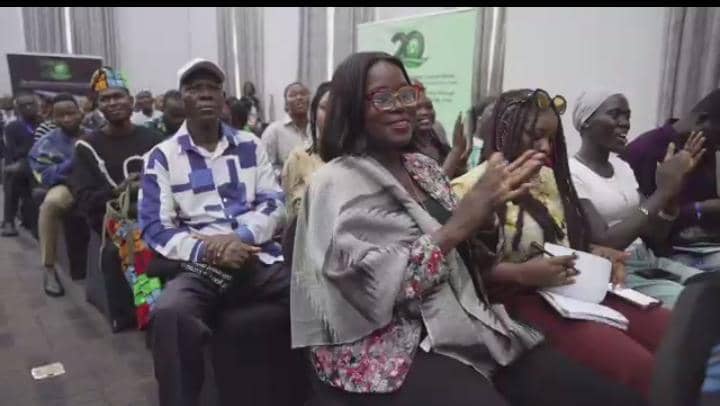
LAGOS — On a warm Tuesday at The Providence Hotel in Ikeja, the room filled with Nigeria’s most respected journalists, editors, and Nobel laureate Wole Soyinka was told something that landed like a rebuke.
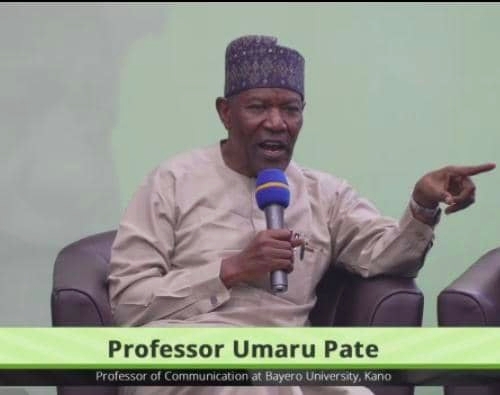
The problem with Nigerian journalism, said Prof. Umaru Pate, is not the students. It is the teachers.
“Our lecturers who are the deliverers are our greatest challenge today — not even our students,” Pate, a Professor of Communication at Bayero University, Kano, told the 18th Wole Soyinka Centre Media Lecture Series.
“Many of our students are better equipped in terms of computer skills and modern thinking than some of our colleagues who still see themselves as local champions within the context of their classrooms.”
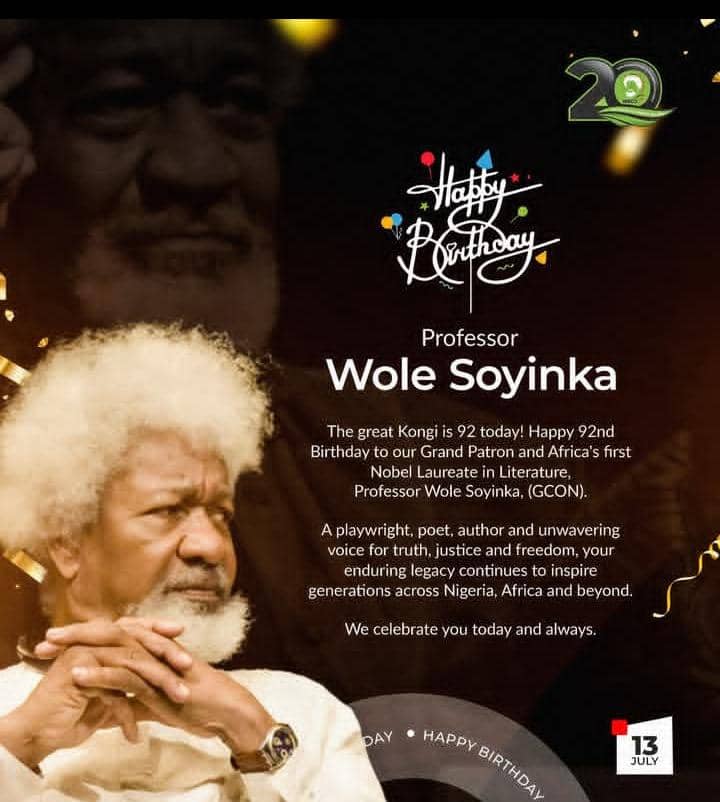
It was the bluntest moment of an afternoon meant to mark both celebration and alarm. The occasion was twofold: honoring Soyinka’s 92nd birthday and that of press freedom advocate Lanre Arogundade, and unveiling the Wole Soyinka Centre for Investigative Journalism’s 2025 report, “Silenced Voices, Shrinking Space: Civic Freedoms Under Pressure.”
The report’s findings were grim. But Pate’s indictment turned the lens inward — to the universities that train the next generation of reporters.
The Classroom That Time Forgot
Pate, who chaired the National Universities Commission committee that overhauled Nigeria’s Communication and Media Studies curriculum, described a profession racing forward while its classrooms stand still.
The new curriculum, benchmarked against UNESCO standards, now includes Media Economics, Reporting Conflict and Security, Safety of Journalism, and Computer Logic. Universities have bought computers. The syllabus has changed.
The people teaching it have not.
“Many colleagues are still talking about the five Ws and H, the role of radio in agriculture and other old approaches while the world has changed and journalism has changed,” he said.
He called it being stuck in the “older ways,” unable to grasp what he termed “the new testament of journalism” — a landscape where reporters must be entrepreneurs, data analysts, and digital security experts, not just note-takers.
“We have invested significantly in computers and other technologies to facilitate learning, but our greatest challenge remains changing the orientation of lecturers,” Pate said. He appealed directly to Soyinka and other elder statesmen to help “reorient” educators so they can teach the new courses and prepare students for careers that no longer end at a newspaper desk.
The stakes, he argued, are human. “It is painful to train a first-class student only for that person to become miserable — not because he lacks intelligence, but because he is unfortunate to become a practising journalist.”
A Civic Space Under Pressure
That misery, the WSCIJ report suggests, begins long before graduation.
Drawing from 570 media reports across 54 organizations, researchers documented 245 verified incidents of civic space violations in 2025. The trend line points down.
About 89% — 219 cases — involved state actors. The Nigeria Police Force alone accounted for 118. Freedom of expression was the most targeted right, with 172 incidents.
But the report flagged a new shift: the targets are no longer just journalists. In 2024, reporters were the primary victims. In 2025, ordinary citizens saw a sharp increase in arrests, summons, detentions, and litigation.
The methods have also changed. Of the 245 cases, 145 were “non-violent” — administrative actions, regulatory sanctions, lawsuits. They attract less outrage than assaults, said reviewer Lekan Otufodunrin, but they chill speech just as effectively.
“Freedom of expression remained the most affected civic right,” the report concluded, noting that Abuja and Lagos recorded the highest numbers, likely because they are hubs of politics and media.
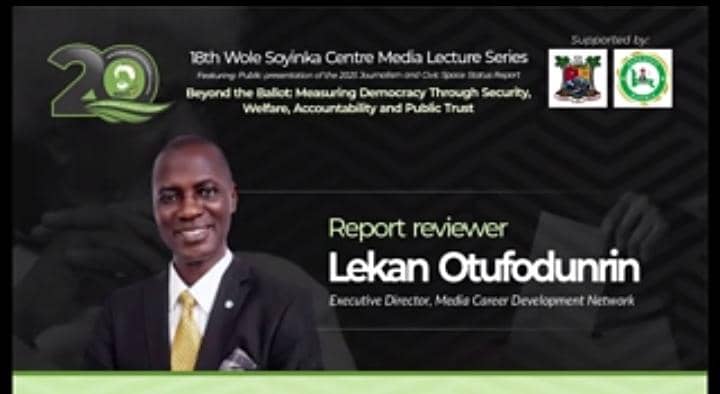
Otufodunrin, a media career development specialist, warned against reading low numbers in other states as peace. “Low figures may reflect under-reporting, inadequate documentation, media constraints and the normalisation of restrictions that no longer receive public attention.”
“You cannot invent what was not reported,” he said. “We knew some journalists experienced violations but never reported them.”
The Economics of Silence
Pate connected the two problems — outdated training and shrinking civic space — through money.
“We are good at telling other people’s stories but not our own,” he said. Media owners, he argued, pay poorly, owe salaries for months, and rely on cheap labor. Journalists stay silent about abuse because unemployment is high and jobs are scarce.
“There are hardly any effective legal mechanisms to check such practices,” he said. “We need stronger professional bodies to document abuses, influence policy and pursue legal action where necessary.”
Lanre Arogundade of the International Press Centre added another layer: during elections, many attacks come not from the state, but from party supporters. Protection, he said, will require legal reform and political will.

A Call for a Collective Voice
As the lecture ended, the message was clear and two-pronged. To fix journalism, start with the lecturers. To protect democracy, start with documentation.
Pate urged policymakers and media owners to move “beyond discussions to practical reforms.” Otufodunrin said reports like WSCIJ’s give the judiciary and lawmakers the evidence they need.
“The democratic environment should naturally be more accommodating,” Otufodunrin said, comparing today to the military era. “Unfortunately, we are still witnessing signs that should not exist in a democracy.”
Pate’s final plea was for unity. “As long as we remain fragmented, we weaken our legitimacy and our ability to defend journalists.”
In a room full of people who make their living bearing witness, it was a reminder that the first story Nigerian journalism must get right may be its own.


Comments