
ANA Abuja Ignites Progress Debate: ‘Schools Must Be Incubators of Creativity, Not Certificate Factories’ — Prof. Fawehinmi at Writers’ Dialogue
At the April Reading and Writers’ Dialogue held Saturday in Mpape, the Vice Chancellor of UniAbuja declared writing a “fundamental human competency” as ANA Abuja announced a new literary prize in his honour. Teen poets, literary giants, and academics converged on Mamman Vatsa Writers’ Village to confront a national question: Are Nigerian schools raising thinkers or just graduates?
BY YEMI MERCY ENOCH | LIGHTRAY! MEDIA | ABUJA
ABUJA, Nigeria — Saturday, April 25, 2026
The foothills of Mpape turned into a laboratory of ideas on Saturday as the Association of Nigerian Authors, Abuja Chapter, hosted its April Reading and Writers’ Dialogue under the theme The Role of Educational Institutions in Fostering Human Progress Through the Written Craft.
Held at Mamman Vatsa Writers’ Village at 1:30 PM, the dialogue drew seasoned academics, literary giants, secondary school poets, and university students into one room — and one argument: that the written word, not just certificates, drives national development. The event received prominent coverage from the News Agency of Nigeria and Nigeria Television Authority.
“INCUBATORS OF CREATIVITY”
Chairman of ANA Abuja, Arc. Chukwudi Eze, FANA, opened the session with a charge to Nigeria’s education system.
“Educational institutions must be incubators of creativity, not warehouses for certificates,” Arc. Eze said. “If our schools cannot teach a child to write a petition, a policy, or a story that changes a community, then we are graduating tenants in a country others will design.”
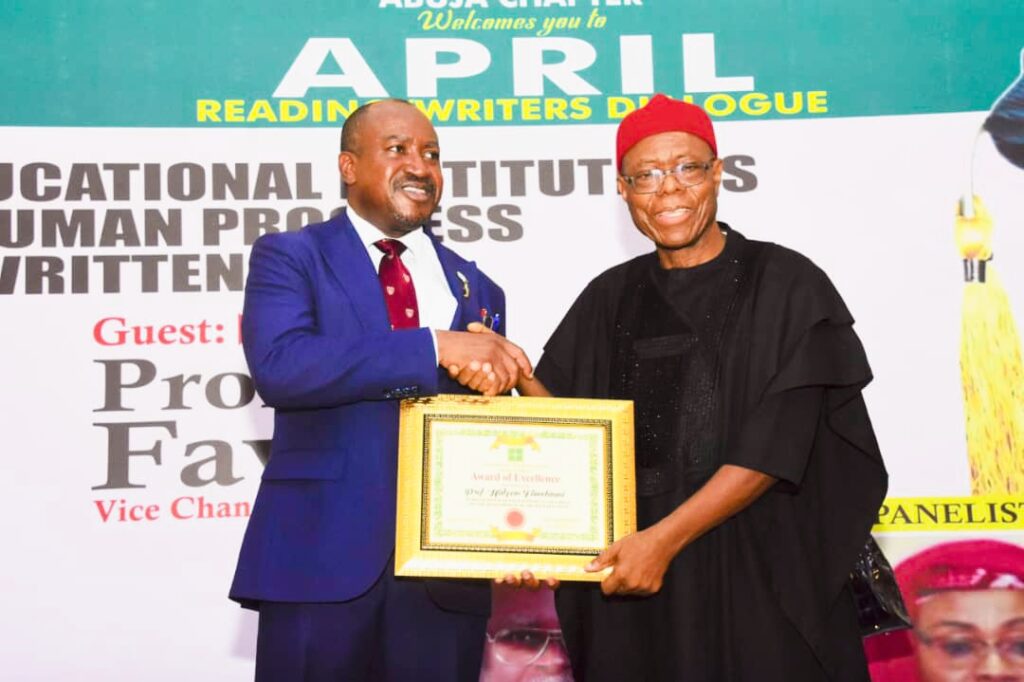
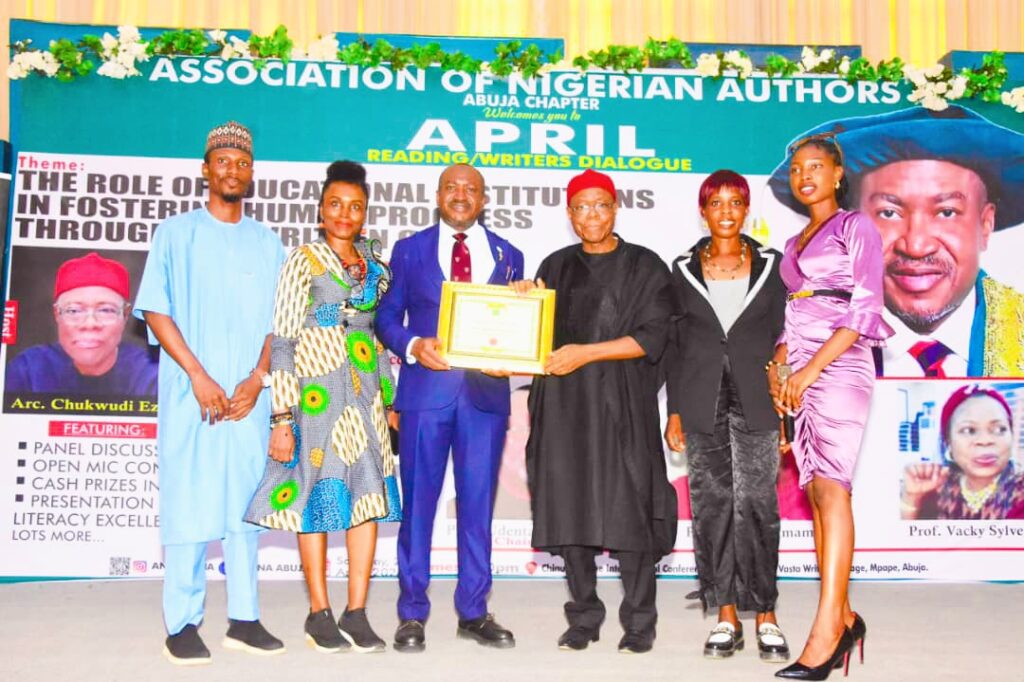
In a major announcement, Arc. Eze unveiled a new literary prize in honour of the Guest of the Month, Professor Hakeem Babatunde Fawehinmi, Vice Chancellor of the University of Abuja, renamed Yakubu Gowon University. He cited the VC’s recent approval of school buses to transport students to ANA events as “leadership that understands access.”
A MEDICAL DOCTOR’S CASE FOR THE HUMANITIES
Professor Fawehinmi, the Special Guest Speaker who is a medical doctor and Vice Chancellor of the University of Abuja , delivered what attendees called a “bridge speech” between science and literature.
“Writing is not a skill reserved for English departments,” Prof. Fawehinmi told the audience. “It is a fundamental human competency. The world is shaped not just by medicine, but by the power of stories. We must move away from certificate celebration and toward a real culture of reading.”
He warned that Nigeria’s obsession with paper qualifications without critical thinking has produced graduates who cannot draft a memo to fix a flooded street. “A doctor who cannot document a case kills a patient. A citizen who cannot write his rights loses them.”
THE PANEL: STORYTELLING AS NATIONAL INFRASTRUCTURE
Award-winning writer Lady Ejiro Umukoro moderated the dialogue, steering panelists toward practical answers.
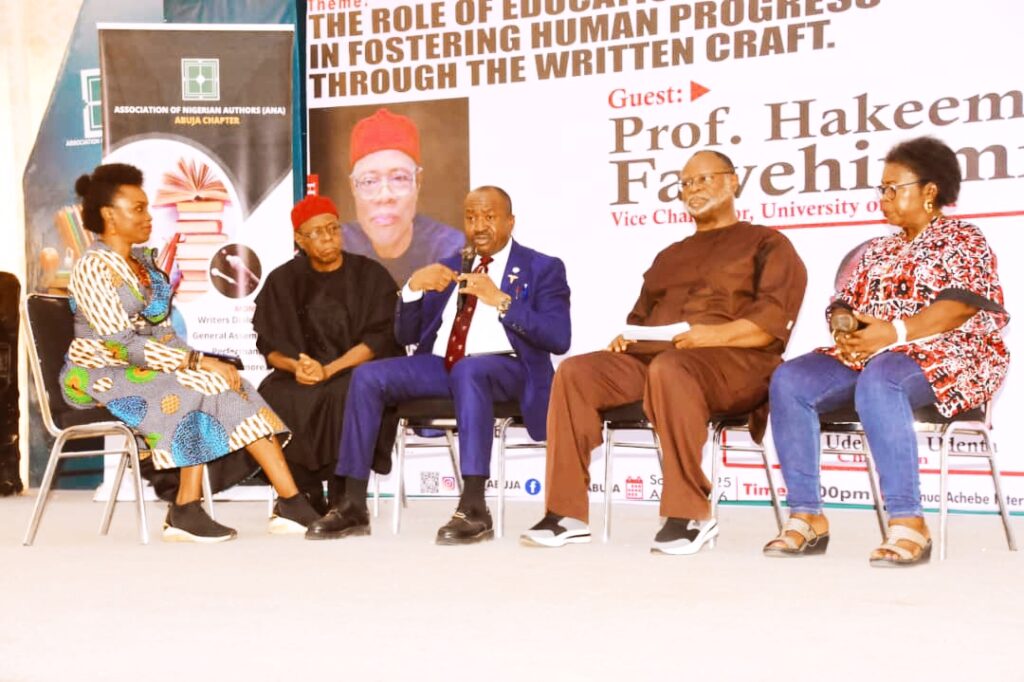
Prof. Vicky Sylvester spoke on the transformative power of storytelling, arguing that “nations that archive their pain heal faster.” Prof. Udenta O. Udenta framed the written word as “a force for societal change,” citing how decrees, constitutions, and petitions — all written documents — decide who eats and who leads.
“Oil made Nigeria rich on paper,” Lady Ejiro said. “But it was the Petroleum Industry Act — written sentences — that decided who got paid. Writing is infrastructure.”
NEXT GENERATION TAKES THE MIC
The spirit of mentorship dominated the afternoon. The Adelaja twins, aged 13, presented copies of their second published books to the Vice Chancellor, drawing applause from the audience of students and adults.
A lively Q&A followed, creating rare direct interaction between university leadership and the public. Students questioned Prof. Fawehinmi on curriculum reform, access to publishing, and why “creative writing” is treated as extracurricular.
SECONDARY SCHOOL POETS STEAL THE SHOW
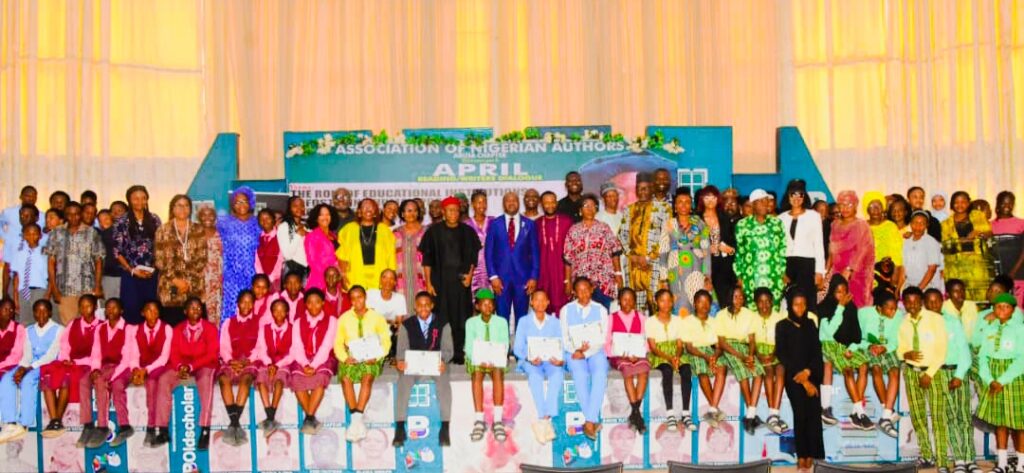
A major highlight was the recognition of secondary school students who demonstrated exceptional poetic talent. Participating schools included Flourish Academy, Marvelous Prospective Academy, and Nigerian Tulip (Turkish) International Colleges.
Poetry Winners: Ifeanyi Onyinyechi, Ohere Naomi, Ohiani Rodiyatulallah, Francis, Osino Queen-Christabel, and Emmanuella Adeniyi-Dabnak. Their readings, attendees said, proved that “the next constitution might be in a 16-year-old’s backpack.”
WHY THIS MATTERS
The April Dialogue lands at a time when Nigeria’s education sector faces criticism for prioritizing rote learning over critical literacy. ANA Abuja’s position is clear: schools that do not teach writing as civic expression are graduating a generation that can post but cannot publish, can complain but cannot draft the law that makes the march unnecessary.
BOTTOM LINE
Saturday’s dialogue proved one LightRay! principle: when the written craft is prioritized, it does more than preserve knowledge. It drives the very soul of national development.
As Prof. Fawehinmi left Mamman Vatsa Writers’ Village, one student was overheard telling him: “Sir, you gave us buses. Now give us a press.”
The Vice Chancellor smiled. “Write the proposal. That’s how progress starts.”
LightRay! Media is a public interest platform documenting policy, culture, and accountability in Nigeria. For tips: editor@lightraymedia.org


Comments