
LIGHTRAY! WINS: Lady Ejiro Umukoro’s Campaign Forces FG to Cut Textbook Fees, Order Refunds
By LightRay! Education Desk
ABUJA — The Federal Government has bowed to nationwide pressure and reversed a controversial hike in textbook assessment fees, slashing the charges and ordering refunds for publishers who paid under the earlier rates.
Ahead of the rollout of the National Textbook Ranking System in September, the Federal Government has reduced the cost of assessing and ranking school textbooks following sustained pressure from publishers and education advocates.
The directive to the Nigerian Educational Research and Development Council, NERDC, marks a major victory for education advocates who warned the policy would drive up the cost of school books and shut out low-income families.
According to the Nigerian Educational Research and Development Council (NERDC), the assessment fee has been reduced by 25 per cent, from ₦2,000 to ₦1,500 per page, while the ranking fee has also been cut by 25 per cent, from ₦1 million to ₦750,000 per textbook title.
In a statement issued on Wednesday, the council said the review was intended to ease the financial burden on publishers and authors while encouraging wider participation in the new textbook evaluation process.
Under the revised structure, NERDC is to implement the lower fees immediately and process refunds for publishers assessed at the previous rates. The government said the move is to ease financial pressure on publishers, expand participation in textbook evaluation, and keep learning materials affordable.
LIGHTRAY! AT THE FOREFRONT
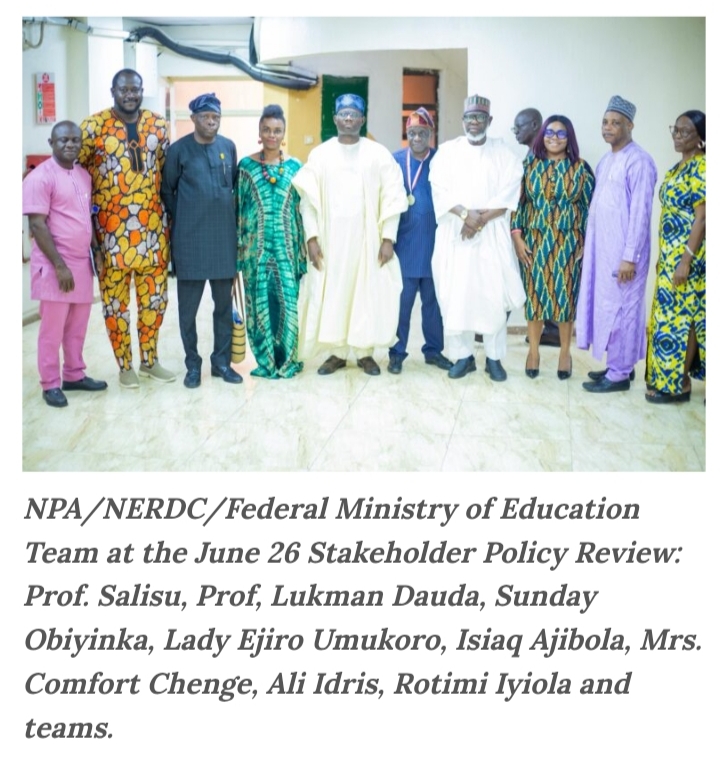
It would be recalled that LightRay! Media Founder and Publisher, Lady Ejiro Umukoro, led the national campaign against the fee hike, which led to a formal stakeholders meeting with the Minister for Education, Professor Suwaiba Sa’id Ahmad, LightRay! Media, Nigeria Publishers Association and Network of Book Clubs and Reading Culture Promoters on 26th June at the Federal Ministry of Education Secretariat in Abuja.
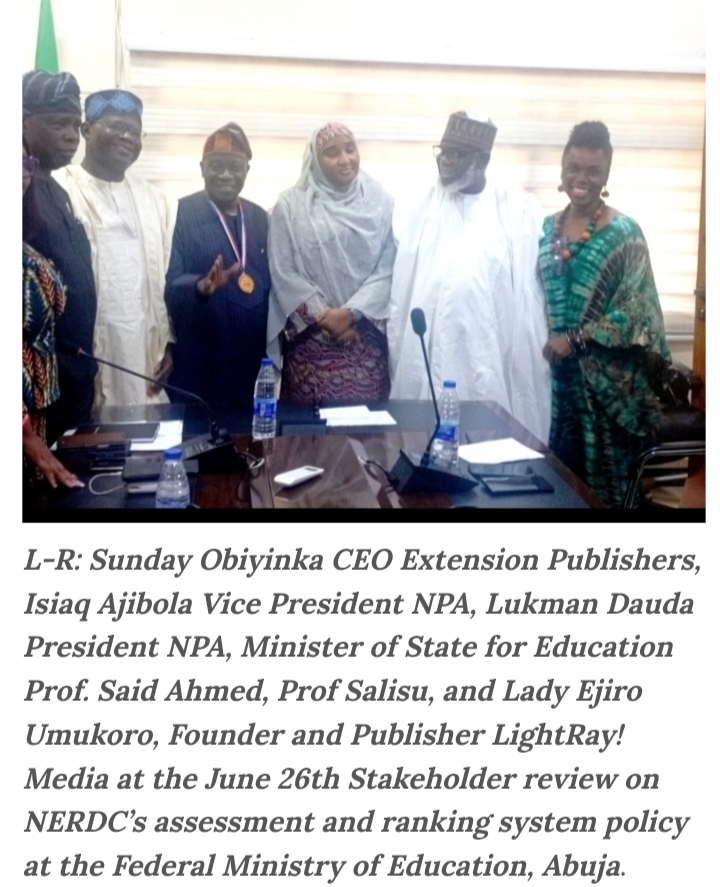
For weeks, Lady Ejiro took the fight to national and global audiences — calling out the policy on Arise News, News Central, ADBN, and across international media platforms. She described the initial charges as insensitive and ill-timed in a country blessed with oil, gas and solid minerals.
“In a resource-rich nation like Nigeria, education ought to be free. Countries with far less than we have provide free textbooks. We cannot tax knowledge and expect development,” she said during her media engagements.
Lady Ejiro also condemned what she termed opaque ranking systems and prohibitive assessment fees that threatened to make textbooks unaffordable. She also noted that the current slash was falls short of best practices by the ministry which sees itself as an revenue generating organ rather than as an enabler of quality education and the democratisation of knowledge, especially at the early years of student development.
Her advocacy drew strong backing from the Nigerian Publishers Association, which warned the fees would push book prices beyond the reach of average families and undermine access to quality education.
Publishers and authors seeking assessment and ranking of their textbooks are to begin paying the revised fees with immediate effect. Those who had already paid the previous assessment fee of ₦2,000 per page will be refunded the excess amount.
WHAT THE REVERSAL MEANS
The FG’s reversal, following engagements between the Federal Ministry of Education and stakeholders, signals a retreat by NERDC. For publishers, it removes an immediate cost barrier. For parents and students, it offers relief ahead of the new school session.
For LightRay!, the outcome validates months of watchdog journalism and public advocacy aimed at holding institutions accountable.
“This is a small shift in the policy review is for Nigerian children, for publishers, and for every voice that said education should not be commodified,” Lady Ejiro said.
Whether NERDC pays refunds promptly and sustains the lower fees will determine if the government’s pledge moves from policy paper to classroom reality.


Comments