
‘We Are Still Arguing Over Women’s Bodies’: Melbourne Declaration Recasts Gender Equality as Accountability, Not Aspiration
By LightRay! Global Desk | Melbourne
MELBOURNE — Thirty-one years after the Cairo population conference and three decades after Beijing’s landmark women’s rights blueprint, the world is still litigating a question the United Nations Deputy Secretary-General says should have been settled.
“Three decades after Beijing, and thirty-one years after Cairo, we are still arguing with men over whether a woman’s body belongs to her,” Amina J. Mohammed told delegates Wednesday at Women Deliver 2026. “Securing the rights of women and girls is the world’s unfinished business. If anything, it is moving backward with new technologies amplifying misogyny and online violence.”
Her rebuke was not rhetorical flourish. It was the opening argument for the Melbourne Declaration for Gender Equality, launched this week to 6,000 delegates from 189 countries as a deliberate pivot from promises to proof.
FROM PLEDGES TO RECEIPTS
The Declaration, unveiled at the first Women Deliver conference held in the Oceanic Pacific, does not introduce new goals. It prosecutes old ones. Drafted from the input of more than 650 voices across regions, generations, and movements, the document is a framework for enforcement. It calls on States to meet human rights obligations, institutions to strengthen accountability, and funders to shift resources to feminist movements and locally led change.
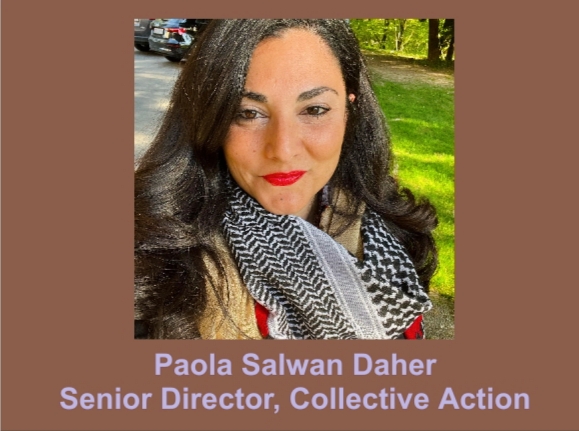
“This is about aligning action with commitments that already exist,” said Paola Salwan Daher, Senior Director for Collective Action at Women Deliver. “The Melbourne Declaration creates a shared reference point for what accountability looks like, across governments, institutions, and funders, and what must change moving forward.”
The shift is structural. The Declaration demands a reorientation of the gender equality ecosystem: prioritize public systems, strengthen civil society’s power to hold governments to account, and ensure international actors support, rather than substitute, State responsibility and local leadership.
“The future of gender equality depends on whether we are willing to invest in the people and movements who have always led this work,” Salwan Daher said. “It makes clear that resourcing feminist movements is critical both to defend hard-won gains and to push forward with renewed clarity, solidarity, and purpose.”
WHO’S SIGNING UP — AND WHY IT MATTERS
Nine countries have already endorsed the Declaration: Colombia, Finland, France, Mexico, Norway, Slovenia, Spain, the United Kingdom, and Uruguay. Their backing signals a bloc willing to be measured against the document’s benchmarks, not just applauded for signing it.
The location mattered. Hosting WD2026 in Melbourne centered First Nations leadership and Pacific voices, embedding sovereignty and self-determination into the Declaration’s architecture. The First Nations, Indigenous Women’s Statement, integrated into the week’s proceedings, insisted that just futures must be led by Indigenous women, girls, and gender-diverse people.
The Declaration’s name is geography as accountability. “Named to honour the place where the global community came together, after months of consultation and congregation, to shape a shared path forward,” organizers said.
‘NOT A LACK OF PROMISES’
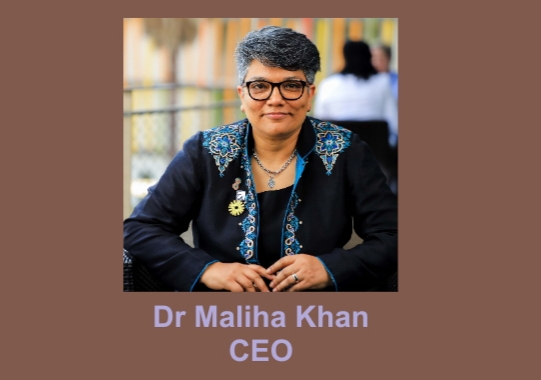
Women Deliver President and CEO Dr. Maliha Khan called the Melbourne Declaration “a decisive turning point.”
“It’s a commitment to do things differently,” Khan said. “It recognizes that the challenge is not a lack of promises, but a failure to deliver on them. What comes next must be defined by accountability to people, and not just to systems.”
“We are calling for a shift in power toward communities, toward movements, and those most affected by inequality. This is how we build a more just and sustainable future,” she said.
That urgency was driven by data and context discussed across the five-day conference: chronic underinvestment in gender equality, shrinking civic space, coordinated anti-rights movements, and new vectors of harm. Tech-facilitated gender-based violence, economic instability, climate shocks, and conflict are “reshaping the lives of millions,” Khan said.
“We are at a moment where progress is not guaranteed,” she added. “The impact of the Melbourne Declaration will be measured by whether it responds to these realities and delivers change where it is most urgently needed.”
THE MONEY: $600M FOR MOVEMENTS, $62.5M FOR LOCAL WOMEN’S RIGHTS
If accountability is the doctrine, financing is the test. WD2026 saw a cascade of commitments tied directly to the Declaration’s priorities:
Commitment Amount / Scope Focus
Accelerate Together $600M annually | Grassroots, women-led movements in climate, economic justice, bodily autonomy. Led by Mama Cash, Alliance for Feminist Movements, Gender Funders CoLab, Prospera International.
Australia DFAT ~$62.5M over 8 years Second phase of Accelerating Investment in Women’s Rights for locally led women’s rights orgs and funds.
CIFF $61M | Ending child marriage impacting girls and adolescent women.
Fondation CHANEL + Dutch MFA + others >$23M | Leading from the South, marking 10-year anniversary.
Australian philanthropic coalition $32.8M over 3 years 11 major funders incl. Fondation CHANEL, Minderoo Foundation.
Gates Foundation $11.5M Investments in adolescent girls, incl. partnership with Girl Effect.
Other launches included the Feminist Health Systems Charter, linking health to decolonization and systems change, with Mexico committing to advance health as a human right. The Adolescent Girls Era Campaign united 47 organizations to support girls’ participation in advocacy. The Melbourne Parliamentary Call to Action pressed legislators to turn SRHR commitments into law.
PREVENT, a global coalition led by The Lotus Flower, targeted tech-facilitated gender-based violence. Girl Effect secured backing to expand girls’ access to SRHR, mental health support, and digital platforms.
THE SYSTEMS UNDER THE MICROSCOPE
Conference themes repeatedly returned to systems failure. Delegates cited underfunded public health infrastructure, judicial systems that do not enforce existing protections, and international aid that bypasses local women’s organizations.
The Declaration’s answer is to invert the power flow. Donors must fund feminist movements directly. Governments must report on delivery, not just policy. Multilateral institutions must stop substituting for State responsibility.
New tools launched at WD2026 aim to track that inversion: ADB’s new Gender Equality and Women’s Empowerment Policy, the Gender in Foreign Policy Index, and Guttmacher’s Safe Abortion Calculator all embed consultations and real-time data.
WHAT HAPPENS NEXT
The embargo lifted at 12:30 PM AEST on April 30. The real clock starts now.
The Melbourne Declaration is owned “not by any single organization, but by the people and movements driving it forward,” Women Deliver said. Its success will be measured in budgets, laws, and whether a girl in rural Uruguay or Uttar Pradesh can access services without a permission slip from power.
As Dr. Khan put it: “The impact of the Melbourne Declaration will be measured by whether it responds to these realities and delivers change where it is most urgently needed.”
After thirty years of declarations, the world has the language. Melbourne is asking for the receipts.
LightRay! Media is a public interest platform covering policy, accountability, and human development. For tips: contactlightraymedia@gmail.com.


Comments