
Beyond Certificates: ANA Abuja Champions Writing as Infrastructure for Human Progress
By Oluwatobiloba Hephzibah Davis-OlaOluwa, a year 2 undergraduate of the International Institute of Journalism, Abuja.
The Association of Nigerian Authors, Abuja Chapter, hosted its April edition of the Reading and Writers’ Dialogue on Saturday, April 25, 2026, at Mamman Vatsa Writers’ Village, Mpape, Abuja. The theme, “The Role of Educational Institutions in Fostering Human Progress Through the Written Craft”, set the tone for an afternoon that was calm, motivational, and deeply impactful.
The anchor for the day, Lady Ejiro, opened the programme by welcoming the host, Arc. Chukwudi Eze, the elected Chairman of ANA Abuja. She further welcomed the Special Guest, Prof. Hakeem Fawehinmi, Vice Chancellor, University of Abuja, and acknowledged the presence of other notable writers, academics, and students in attendance.
The programme commenced with a remarkable speech by the Vice Chancellor. Prof. Fawehinmi began with a quiet charge: “We are still becoming.” He framed writing as infrastructure in the lives of the young generation and encouraged the audience to read widely, think deeply, and write with courage. “Never underestimate the power of a well-crafted sentence to change the world,” he said. His address challenged the notion that writing belongs only to English and Literature departments, insisting it is a fundamental competency for every discipline.
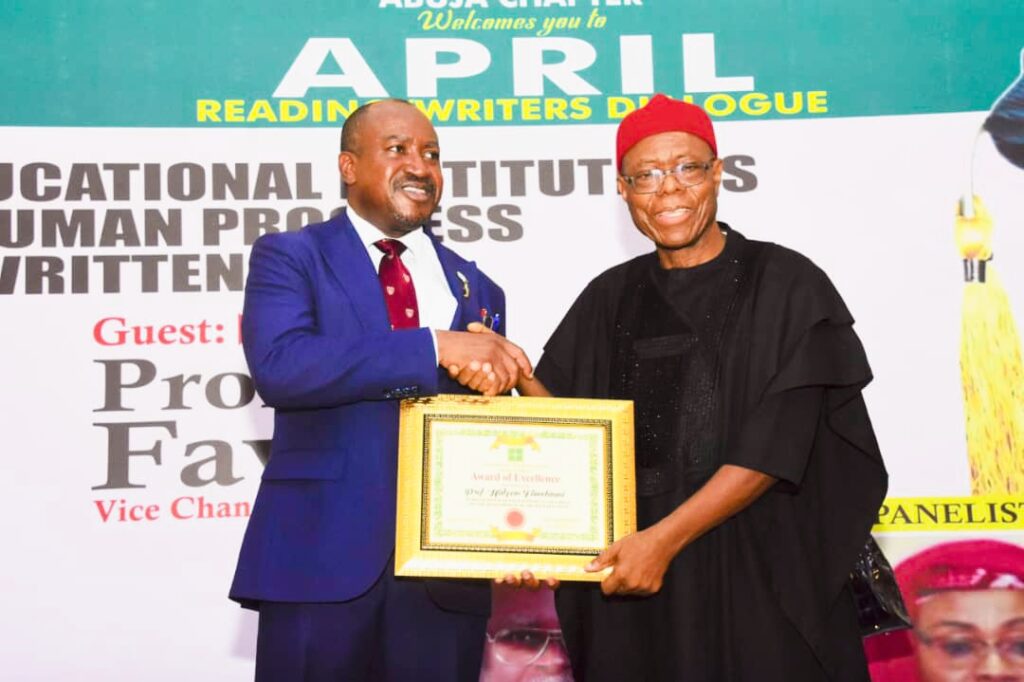
After the VC’s speech, Lady Ejiro invited the Host, Arc. Chukwudi Eze, to give opening remarks on the theme. In his speech, he urged everyone to engage thoughtfully, listen deeply, and contribute meaningfully. He encouraged participants not to be passive members of the gathering, but to embrace active dialogue — one that inspires innovation and strengthens our shared commitment to human progress through the written craft.
The literary energy rose when Francis, a student from Marvellous Prospect School, delivered a spoken word piece on Integrity. He was followed by another student from the same school who also performed a spoken word presentation, drawing applause from the audience.
The programme then moved into the panel discussion. Lady Ejiro introduced each panelist with an exceptional brief biography before opening the floor. The panel featured Prof. Hakeem Fawehinmi, Prof. Udenta O. Udenta, and Prof. Vicky Sylvester. Lady Ejiro, anchoring the session, asked each panelist for their opinion on the theme of the day.
Prof. Vicky Sylvester pinpointed the link between human progress, ethics, and writing. She stressed that writing is not just a skill but a tool for shaping society. She further explained how the lack of writing skills exposes institutional failures, captures gaps in learning, and reveals the rigid curriculum in our educational system.
Prof. Udenta O. Udenta, in his contribution, laid emphasis on scholars as writers and agents of social transformation. He noted that one needs to be educated before one can read and write widely, underscoring the bridge between literacy and leadership.
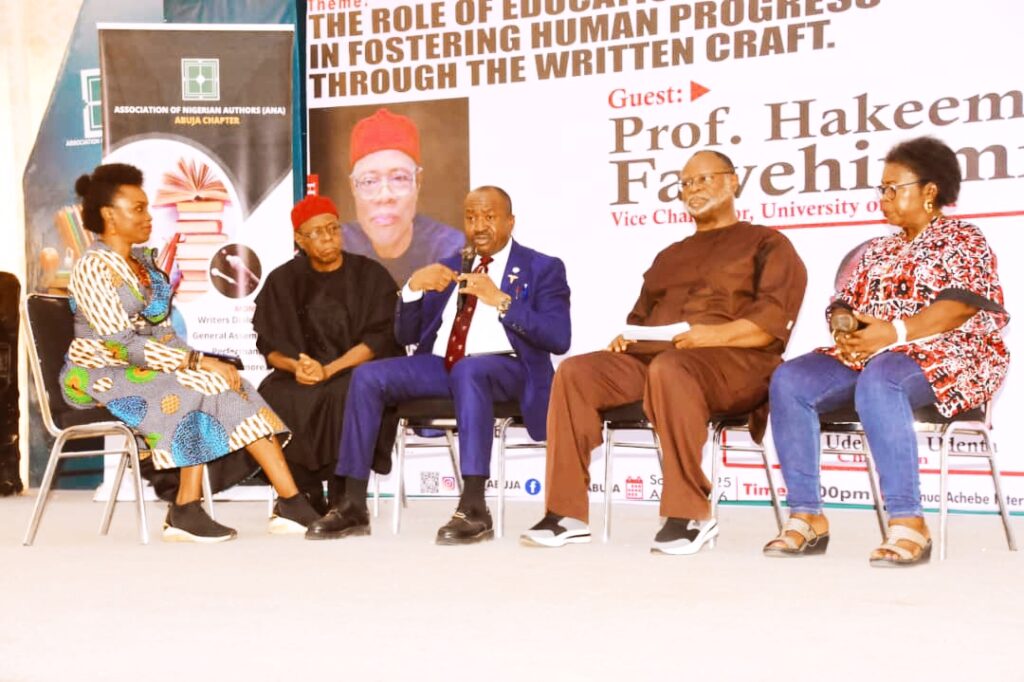
Lady Ejiro later asked the panelists if writing is a tool for Western propaganda. The question was directed to Prof. Hakeem Fawehinmi, who explained that education as a whole changes the way one thinks. He added that creative thinking alters how we relate, how we communicate, and how we process the world. It becomes instinct and makes the individual distinct.
The session continued with a lively question and answer segment. Students, teachers, and writers in the audience engaged the panelists with questions ranging from academic discipline to institutional integrity.
After the session, the Chairman of ANA Abuja, Arc. Chukwudi Eze, presented books to the Vice Chancellor on behalf of the Adelaja twins. Taiwo Mary and Kehinde Martha, the 13-year-old young writers, were present at the book presentation to Prof. Fawehinmi. The moment was captured in photographs as the audience celebrated the twins’ achievement.
In the final moments, secondary school student Opeyemi recited a poem that held the hall in quiet attention. The programme concluded with the presentation of awards to the best students who participated in several competitions relating to the Association of Nigerian Authors.
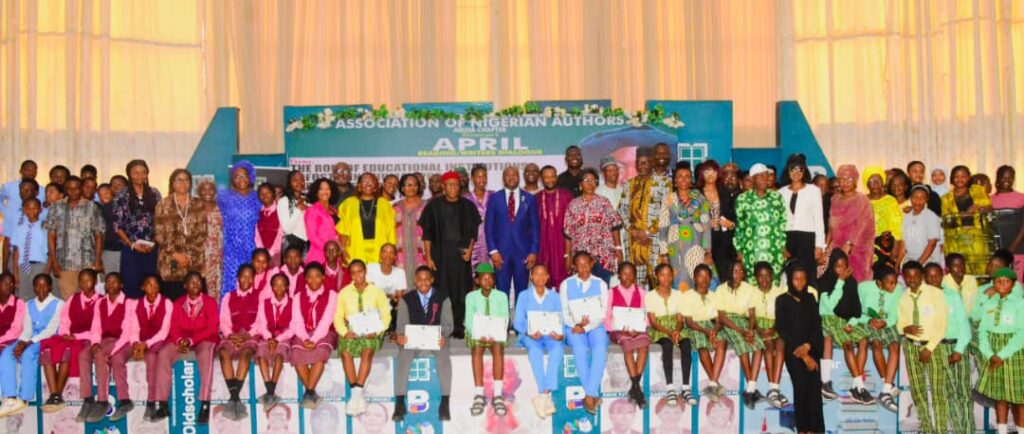
From the Vice Chancellor’s charge to the twins’ bold authorship and the students’ spoken word, the April Reading and Writers’ Dialogue affirmed one message: educational institutions must do more than issue certificates. They must raise writers who can read widely, think deeply, and write with the courage to shape human progress.


Comments