
Navigating the Next Wave of Journalism the Creative Economy in 2026
Editorial Analysis
The year 2026 is shaping up to be a pivotal year for media professionals across broadcasting, digital news platforms, investigative journalism, and the broader creative economy. The convergence of AI‑driven tools, platform‑first distribution, and a renewed focus on trust and community is reshaping career trajectories and opening fresh avenues for growth.
Platform‑First Storytelling — Video, Audio, and Immersive Formats
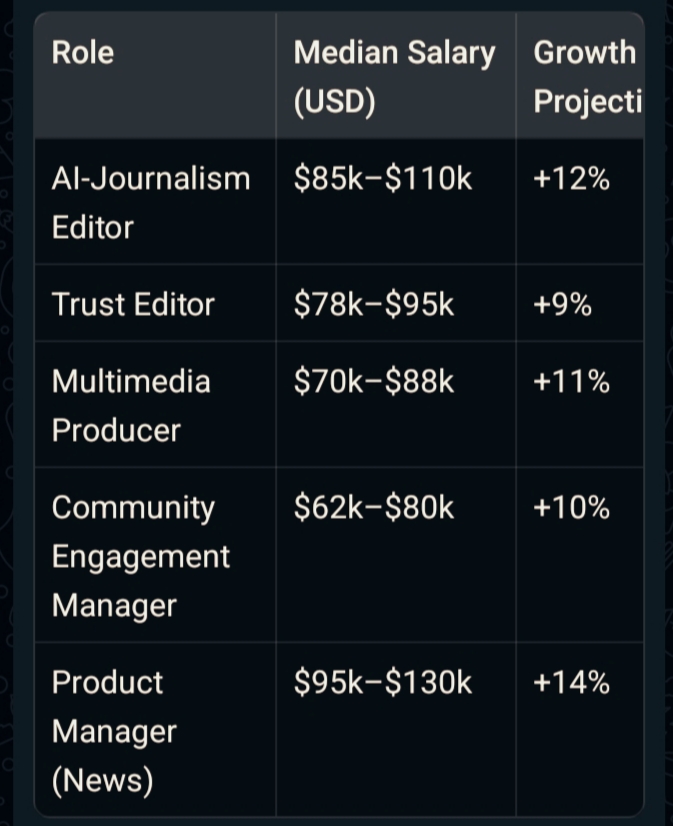
Audiences are fragmenting across TikTok, YouTube Shorts, podcasts, and emerging metaverse spaces. Media companies are hiring multimedia producers, short‑form video editors, and AR/VR storytellers to create bite‑size, immersive experiences. The rise of “creator‑journalist hybrids” means professionals must be comfortable wearing both the reporter’s hat and the content‑creator’s badge.
Career Tip: Build a personal brand on at least two platforms (e.g., a Substack newsletter + a TikTok news channel; LinkedIn + Instagram – observe the social platforms audiences in your countries gravitate to or is dominant. Also think global audience reach) to showcase versatility.
Trust as Currency — Transparency, Fact‑Checking, and Community Engagement
With “slop” (AI‑generated misinformation) dominating the 2026 lexicon, news organizations are doubling down on trust initiatives. Positions like trust editors, community engagement managers, and verification specialists are expanding. Investigative journalists who can demonstrate methodological transparency and collaborate with audience‑fact‑checking groups will become the most sought‑after assets.
Opportunity: Non‑profit and public‑service media are growing, offering stable funding for journalists committed to accountability reporting.
AI‑Powered Journalism — From Automation to Augmentation
Artificial intelligence is no longer a novelty; it’s a core component of newsroom workflows. AI handles data‑heavy tasks—stock market updates, sports recaps, even early‑draft copy—freeing journalists to focus on deep‑dive investigations and narrative storytelling. This is not to say AI-generated stories is for new rooms except the company clearly says its policies uses AI which should be clearly stated.
With AI hallucinations, embedded errors and biases, AI generated content can not be trusted. Despite this reality, trends are pointing to a surge in roles such as AI‑journalism editors, prompt engineers for generative content, and ethics auditors who ensure AI‑generated pieces meet editorial standards. Upskilling in Python, R, and AI‑prompt design will become as essential as mastering the inverted pyramid.
Key Takeaway: Journalists who blend investigative rigor with AI fluency will command premium roles and lead the next generation of newsrooms.
The Creative Economy — Monetizing Journalism Beyond Ads
Subscription models, membership clubs, and creator‑economy platforms (Patreon, Ko‑fi) are reshaping revenue streams. Journalists are launching paid newsletters, micro‑learning courses, and branded content pods, blending reporting with entrepreneurial savvy. This trend fuels demand for product managers, growth marketers, and business development leads within newsrooms.
Action Step: Acquire basic digital‑marketing skills (SEO, email automation, analytics dashboards) to diversify income and future‑proof your career.
Skills to Prioritize in 2026
- Data Literacy: Python/R for analysis, data‑visualization tools (Tableau, Power BI).
- AI Prompt Engineering: Crafting effective queries for generative models.
- Multimedia Production: Video editing (Premiere Pro, DaVinci Resolve), podcasting (Audacity, Hindenburg).
- Ethics & Verification: Fact‑checking frameworks, blockchain provenance, media‑law updates.
- Audience Development: Community management, newsletter strategy, platform analytics.
Career Issues to Explore in 2026
Burnout & Mental Health: The rapid pace of AI integration and platform churn can strain journalists. Building resilience through mentorship and flexible work arrangements will be critical.
Regulatory Pressure: New data‑privacy laws (e.g., GDPR‑style frameworks in emerging markets) will affect audience targeting. Understanding compliance is a valuable differentiator.
Diversity & Representation: Media outlets are actively seeking multicultural voices to reflect global audiences. Specialized training in inclusive storytelling can open doors.
Actionable Roadmap for 2026
Audit Your Skill Set: Identify gaps (e.g., coding, AI prompts) and enroll in short‑term bootcamps or MOOCs.
Build a Portfolio: Publish a mix of investigative pieces, short‑form videos, and data visualizations on a personal site.
Network Strategically: Join industry forums (ONA, GIJN) and attend hybrid conferences focused on AI ethics and platform journalism.
Seek Mentorship: Pair with senior editors or product leads to navigate intrapreneurial projects.
Stay Agile: Allocate weekly time for experimentation—try a new tool, test a TikTok trend, or prototype a micro‑learning module.
In summary, 2026 offers a dynamic landscape where technology, trust, and creativity intersect. Journalists who embrace AI as a collaborator, master platform‑centric storytelling, and champion transparency will not only survive but thrive. The next wave of media careers is less about “reporting the news” and more about “building the news experience”—a shift that promises both challenge and immense opportunity.


Comments