
THE ACADEMY IDEA: Why Daily Trust Is Building a School for a Profession That Doesn’t Trust Schools
The Chairman of the Daily Trust Foundation gave a speech about courses and platforms. What he was really talking about was survival.
A LightRay! Town to Gown News Opinion
ABUJA — It is a peculiar thing to launch a journalism academy in 2026. The business model is broken, the platforms have shifted, trust is thin, and every 22-year-old with a ring light can out-reach a newsroom. And yet, on Tuesday, Malam Bilya Bala, Chairman of the Daily Trust Foundation, stood up in Abuja and announced that he was building a school.
If you listen to Bala’s speech as it was written — a list of interventions, partners, modules, certificates, a training hall with multimedia facilities — you might be forgiven for thinking this was an NGO reporting exercise. He thanked the MacArthur Foundation. He cited more than 2,000 beneficiaries. He mentioned education reporting, energy, banking, natural resources, agriculture, crime, oil and gas, budgeting, media management, mobile journalism across six geopolitical zones, fact-checking, documentary production, and, in August, two weeks of multimedia training for senior editors of the Zamfara State Media Corporation.
It was, in other words, a very Nigerian speech: thorough, earnest, determined to prove that work had been done.
But buried inside the bureaucracy was a diagnosis that deserves more than a press release. It was the most honest thing said at the launch.
Bala listed five gaps his foundation had observed during its MacArthur-funded years:
- Reporters who didn’t know how to investigate.
- Reporters who didn’t understand the beats they covered.
- Reporters who worked in silos.
- An ecosystem drowning in misinformation.
- Experienced journalists who could not operate in a digital environment.
Put less politely: a lot of Nigerian journalism is under-skilled, under-specialized, isolated, digitally illiterate, and increasingly outgunned by the very information disorder it is supposed to correct.
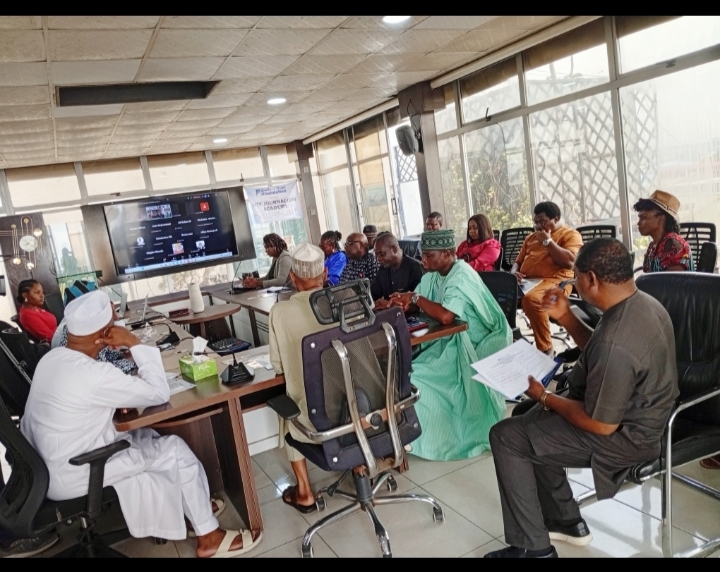
This is not an indictment of individuals. It is an indictment of a system. For years, we have treated capacity building as a workshop — a per diem, a certificate, a group photo. Bala’s argument, whether he intended it as an argument or not, is that the workshop model has failed. What is needed is not another training, but an academy. Not an event, but an institution.
Hence http://dtfacademy.com.ng.
The name is clunky. The idea is not. A digital platform where a reporter in Yola or Abakaliki can take a module on budget tracking at her own pace, take a quiz, earn a certificate, and return to her newsroom with something she can actually use. No flights to Abuja. No hotel allowance. Just learning, on demand.
In the American context, this would be unremarkable — Poynter, CUNY, and a dozen other places have been doing it for years. In the Nigerian context, where professional development is geographically gated and economically precarious, it is a small act of equity.
And yet, Bala’s speech raises the question every academy builder eventually has to face: what is a certificate worth if the newsroom doesn’t value the skill?
Bala himself hinted at this. The Foundation has trained 2,000 people. It has taught mobile journalism in every zone, fact-checking, media enterprise. And still, he had to list the same five gaps. Training, as his own keynote speaker Musikilu Mojeed would note an hour later, is not learning. Learning is what happens when the newsroom allows you to practice what you were taught, when an editor rewards method over speed, when a proprietor understands that investing in a reporter’s ability to read a budget is not charity but business continuity.
What Bala is proposing, then, is more ambitious than http://dtfacademy.com.ng suggests. He is not just proposing courses. He is proposing to build what he calls “a vibrant community of professionals committed to excellence, innovation, and public service.” That is foundation-speak for something much harder to build than a website: a culture.
Conferences and public forums on governance, media, technology and society — as he promised — will not by themselves fix the silo problem. But they might do something equally important. They might remind a profession that has spent the last decade being told to do more with less that its core problem is not that it lacks audience, but that it risks losing authority.
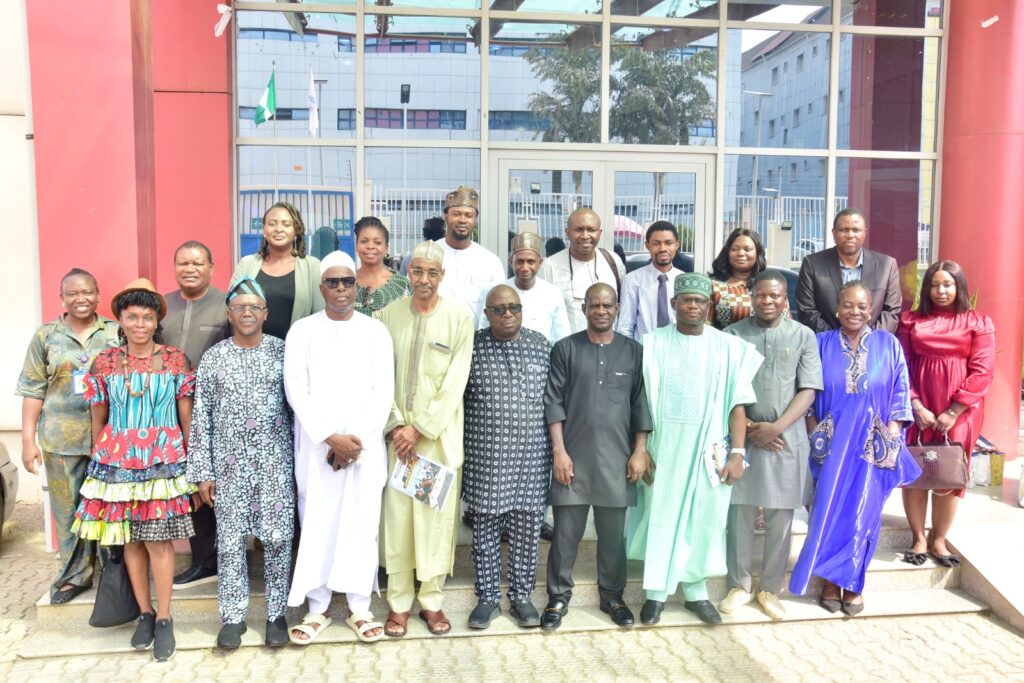
The DTF Journalism Academy has a well-equipped hall. It has multimedia facilities for in-person and virtual learning. It has modules. What it needs now is the one thing no speech can provide: students who believe that the best response to an industry in crisis is not to shout louder, but to know more.
Bala and his board have built the classroom. The question — as always in Nigerian journalism — is who will show up after the launch photos are taken.


Comments