
Friendly Foes: The Hidden Cost of Declaring War on Water
“Water no get enemy.”
In 1975, Fela Anikulapo Kuti turned an old Yoruba saying into a groove. Water is life’s first necessity, the proverb goes. No one in their right mind picks a fight with it.
However, in 2026, it seems Nigerians have forgotten that powerful adage. In this special Investigative spotlight, we uncover the water saboteurs.
By Oluwaseyi Elizabeth Jimoh
ONDO — I grew up believing that. I had never met a person who called water an enemy. Yet in Nigeria, I watch us treat it like one every day.
We meet water before we meet the world. It’s there at birth. It grows our food. It washes us, prays with us, buries us. As children we remember it in the first rain after dry season, in rivers where we learned to swim.
I once argued with a friend that electricity mattered more. “Without power, water doesn’t even get to the tap,” I said. He looked at me the way you look at someone who has missed the point and decided not to say so.
“Go back to Genesis,” he said finally. “Before God said, ‘Let there be light,’ the Spirit was already moving over the waters.”
I laughed and gave up the argument. But the line stayed. Water isn’t an afterthought. It’s the stage.
Somewhere we forgot. The Creator didn’t fill rivers with sachet water bags. Didn’t pipe sewage into streams. Didn’t pave over wetlands and call it development. We did.
Like blood in a body, water is supposed to move. Through rivers, through gutters, through soil, feeding what it touches. Instead we keep blocking it, and then act surprised when it finds another way.
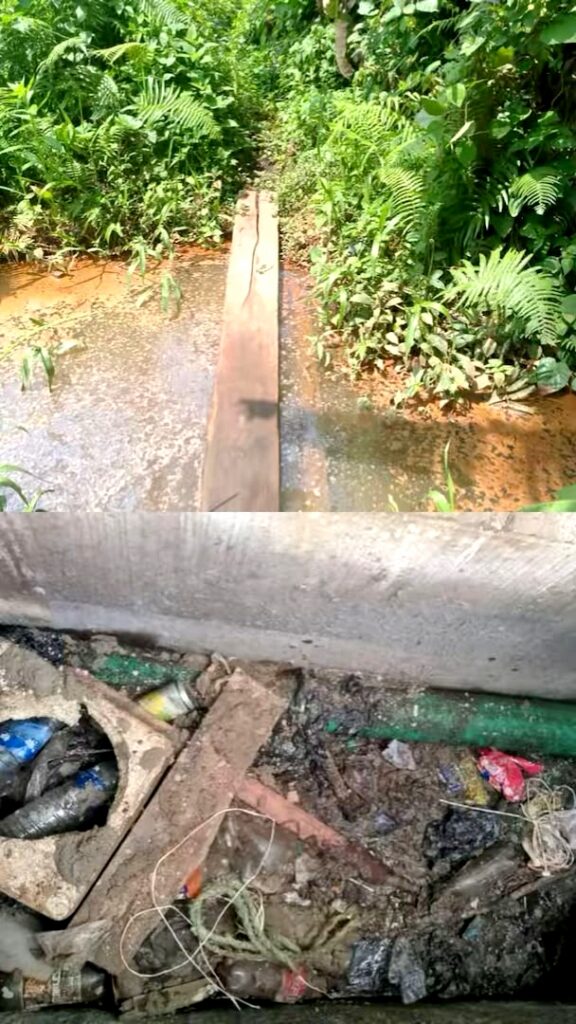
The Neighborhood
In Ondo State, in the southwest, I met Sikiru John. For 15 years he’s worked as a plumber. He’s watched rivers change.
“Fishermen now pour chemicals in the water to catch everything at once,” he told me. “After, nothing lives.” He’s also watched houses and businesses connect pipes straight to streams. “The water that used to feed communities now carries their waste.”
Two hours south, in Lagos, the conversation is louder. After floods, the state commissioner went on record blaming residents. The causes, he said, were man-made: garbage in drains, illegal reclamation of wetlands. The Punch covered it.
The paper also covered a Lagos gym, I-Fitness, that was sealed for allegedly discharging waste into public drains. Pollution, it turns out, doesn’t only come from factories. It comes from places you go to get healthy.
Saluwa
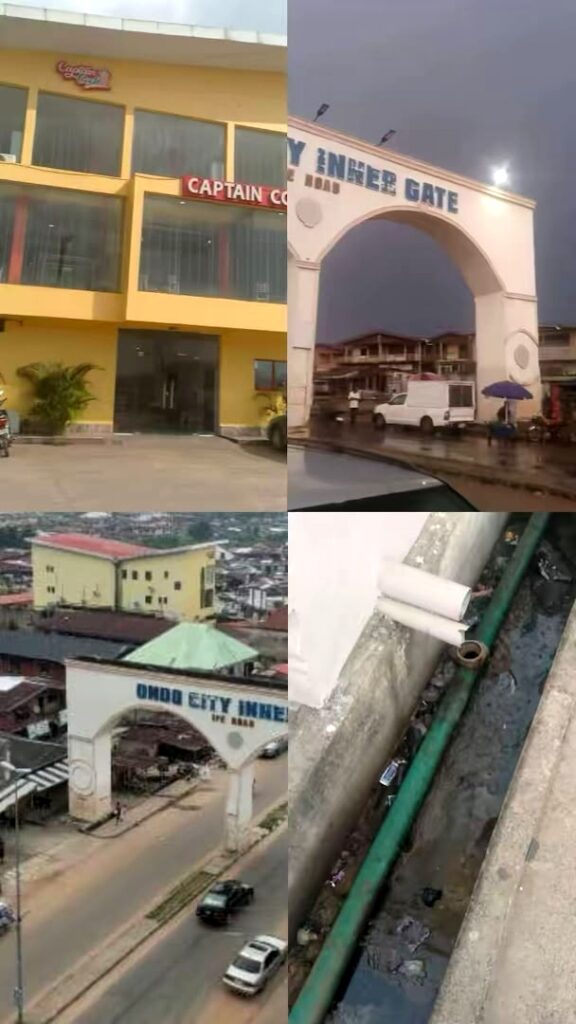
In Ondo City, in a neighborhood called Saluwa, the smell hits you first. For years residents have complained about wastewater they say comes from a nearby eatery. Because the building sits on swampy ground, the owners divert water into open gutters. Sometimes toward the Lisaluwa River.
A woman who fries buns before dawn told me she used to complain. “I stopped,” she said. “The people responsible are stronger than us.”
After one intervention, authorities installed 4-inch PVC pipes. They weren’t enough. The water came back to the street. One property’s solution became everyone’s problem.
The cost is not abstract. The smell drives customers away. Children get sick. People spend money they don’t have on treatment for illnesses that start in a gutter.
The Invoice
Polluted water is never free.
Governments pay when they move money from schools to sandbags. Businesses pay when no one wants to shop on a street that smells. Workers pay in lost days. Families pay at the clinic.
And then there’s the bottle. One plastic tossed in a drain means nothing. A million means a flood. Roads break. Crops drown. People move.
The United Nations says billions still lack safely managed water and sanitation. Behind that number are specific absences: a girl missing school with diarrhea, a woman walking farther for clean water, a farmer watching a river die.
Water is not only an environment story. It is health. It is economics. It is food. It is rights. It is peace. That is why SDG 6 — water and sanitation for all — is not just about boreholes. It is about not ruining what we have.
The Lesson
At a 2026 training for World Water Week, Jonathan Captain-Webb, a water communicator from Australia, told us to change the frame. Don’t think of water only as a resource, he said. Think of it as a relationship. He drew on First Nations teachings: the health of water and the health of people are the same.
After that, every polluted stream looked different. A dying river is not just a dying river. It’s a message.
In Ondo last year, LightRay! Media covered flashfloods with a simple line: “Water does not seek revenge. It simply obeys gravity.” When we block its path, it makes a new one. We call that nature’s anger. Water calls it flow.
The Choice
Water has never declared war on us. It has carried boats, grown rice, turned turbines, and asked for little: space to move, a chance to stay clean.
The same hands that pollute can protect.
Industries can treat wastewater before it enters a river. Regulators can enforce the law evenly. Cities can stop using drains as dumps. Blocked waterways can be opened. Planners can let rivers have room.
This is not only moral. It is financial. Every naira spent keeping water clean saves money later on hospitals, road repairs, and disaster relief. Clean water grows food, supports fisheries, brings tourists, and keeps workers healthy.
For the rest of us, it’s smaller. Don’t dump in the gutter. Use less plastic. Report what you see. Join a clean-up. Tell a child that the stream matters as much as the tap.
I think back to my friend and Genesis. Life begins with care, not conquest.
“Water no get enemy.” The tragedy is that water never chose us as its enemy.
We chose it.
If we want a future where everyone can drink safely, we have to stop being water’s friendly foes. We have to become its guardians.
Because when water flows, life flows with it.


Comments